Professor Janet Anderson: Protecting the Infrastructure of Memory and Digital Heritage
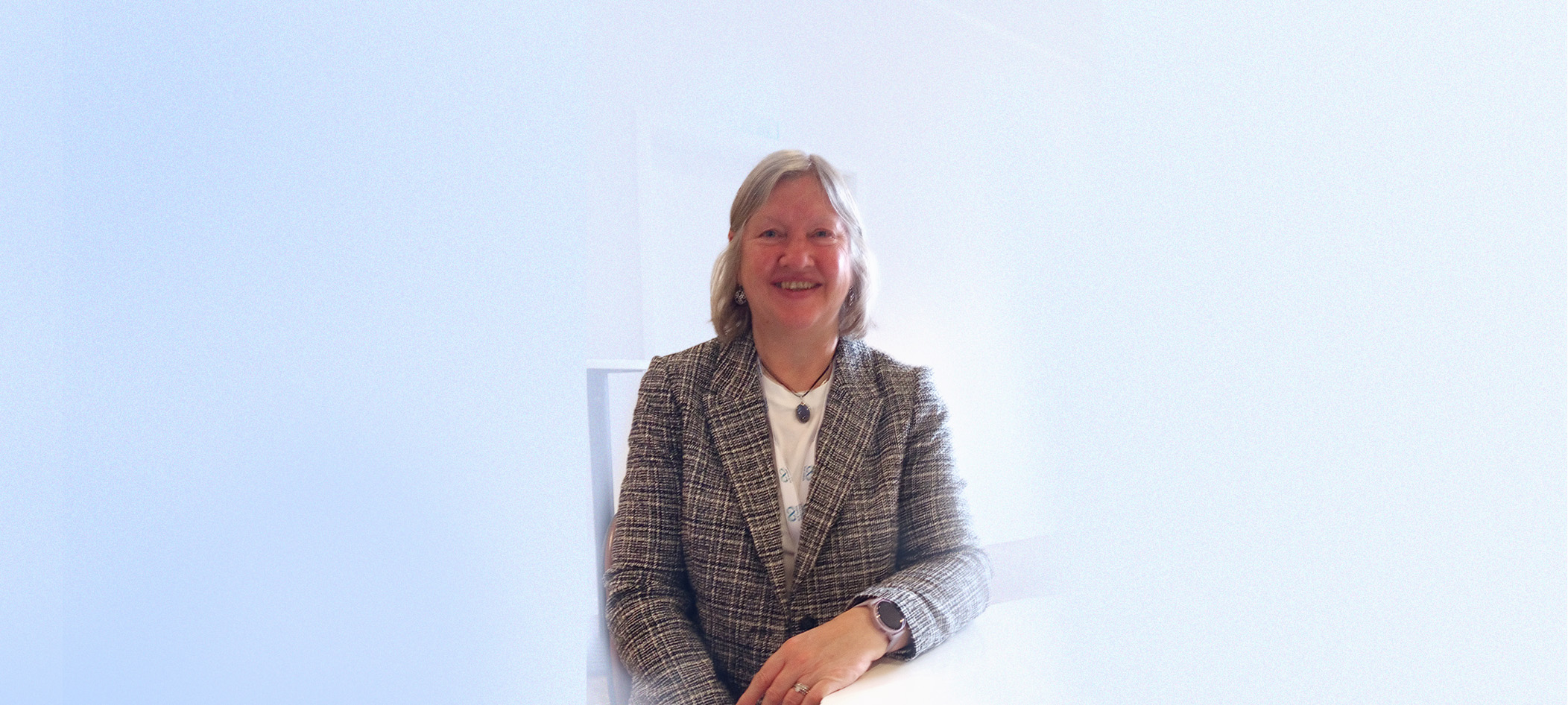
Professor Janet Anderson, a distinguished figure in the field of eArchiving, has spent over a decade shaping the future of digital archiving in Europe. Formerly a professor at the University of Brighton and now a visiting professor at ELTE Budapest, Anderson brings both academic depth and practical leadership to her work.
Janet first encountered Digitalia in 2015 at a DLM Forum Hague meeting where Anssi Jääskeläinen informed her that Digitalia wanted to be part of eArchiving.
Since 2013, she has served as the project manager and coordinator for the European e-Archiving project, which is now evolving into a subforum within the DLM Forum. Her current focus lies at the intersection of digital sustainability and trust — tackling themes such as data security, lifecycle management, and the reliability of digital information.
In an era where digital memory is as fragile as it is vast, Professor Anderson’s work is a vital bridge between technological innovation and cultural preservation.
From equations to emulation: The unlikely professional journey
Professor Janet Anderson’s path into digital preservation was not linear — it was a fascinating weave of disciplines, discoveries, and a few unexpected detours. It all began in 1978 with a BSc in Mathematics, a field she fondly refers to as “the dark side of pure numbers.” From there, she pursued a master’s in Electrical Engineering, which led to teaching mathematics at a teacher training college.
It was there that a simple request — to teach the history of mathematics — sparked a revelation: mathematics had a history worth exploring. That curiosity evolved into a PhD in the history of mathematics, opening the door to the emerging field of computing history and the use of databases in scholarly research.
In the early 2000s, Anderson joined a project to build a virtual museum of computing. Though the initiative ultimately collapsed, it introduced her to the concept of emulation — a turning point that led her deeper into the world of digital preservation. Her involvement in the different projects solidified her commitment to safeguarding digital heritage.
Eventually, she became a professor of Digital Humanities at the University of Brighton, where she focused on preserving complex digital objects. Her leadership in the various project and later the European eArchiving programme (E-ARK) positioned her as a key figure in shaping Europe’s digital memory infrastructure.
For Janet, the journey into information management and archiving began not in a server room or a library, but in the quiet depths of academic research. While pursuing her PhD, she developed a historical database — a project that would quietly lay the foundation for a career bridging technology and the humanities.
This blend of technical expertise and humanistic insight gave Janet a rare skill set: the ability to connect archivists, historians, and IT specialists. It’s a combination that has defined her project leadership ever since, allowing her to navigate the intricate terrain of digital preservation with both precision and empathy.
Digitalia: A quiet powerhouse in European information management
Janet’s first encounter with Digitalia was in 2015 during a DLM Forum event in The Hague — a moment that would quietly mark the beginning of a fruitful collaboration. After delivering a talk on digital preservation, she was approached by Anssi Jääskeläinen who requested that Xamk wants to be part of the eArchiving project.
To Janet, Digitalia stands out as a rare and vital force in the digital archiving landscape — practical, forward-thinking, deeply reliable and secure. What makes the center exceptional is its dual identity: it operates at the intersection of academia and industry, translating rigorous research into deployable, real-world tools. Janet also emphasized Digitalia’s hands-on approach to innovation, particularly its work in AI. Rather than relying on opaque, black-box solutions, the team custom-builds and modifies components to ensure sustainability and economy.
Digitalia provides foundational building blocks that others can adapt or commercialize. Its reputation for technical excellence and pragmatic development makes it a go-to partner for both research initiatives and operational archiving challenges across Europe.
The future of information management: A fragile frontier
For Janet, the future of information management is anything but assured. “Uncertain, and frankly, quite dire,” she admits — a sobering assessment shaped by the turbulent intersection of technology and geopolitics. From Brexit to Russian aggression and the rise of populism, political forces are increasingly entangled with questions of data sovereignty and digital security. During the interview Janet stated that “the theme of our conference is very apt at the moment, isn’t it?” (Conference theme was “Archives in a New Geopolitical Era”)
She also warns against overreliance on dominant US cloud infrastructures, advocating instead for European-built, open-source solutions that prioritize transparency and control. But the path forward is steep: funding for digital archiving is precarious, and many national archives face budget cuts that threaten long-term preservation efforts.
Still, amid the challenges, Janet sees hope. Organizations like the DLM Forum, Digitalia, and a growing network of European collaborators continue to push for practical, robust tools — not just theoretical frameworks. Their work, she believes, is essential to safeguarding digital heritage and sovereignty, and ensuring that the infrastructure of memory remains resilient in an increasingly unstable world.
Interview litteration: Whisper large v3 turbo
Text: Anssi Jääskeläinen and Gemma3 & gpt-oss